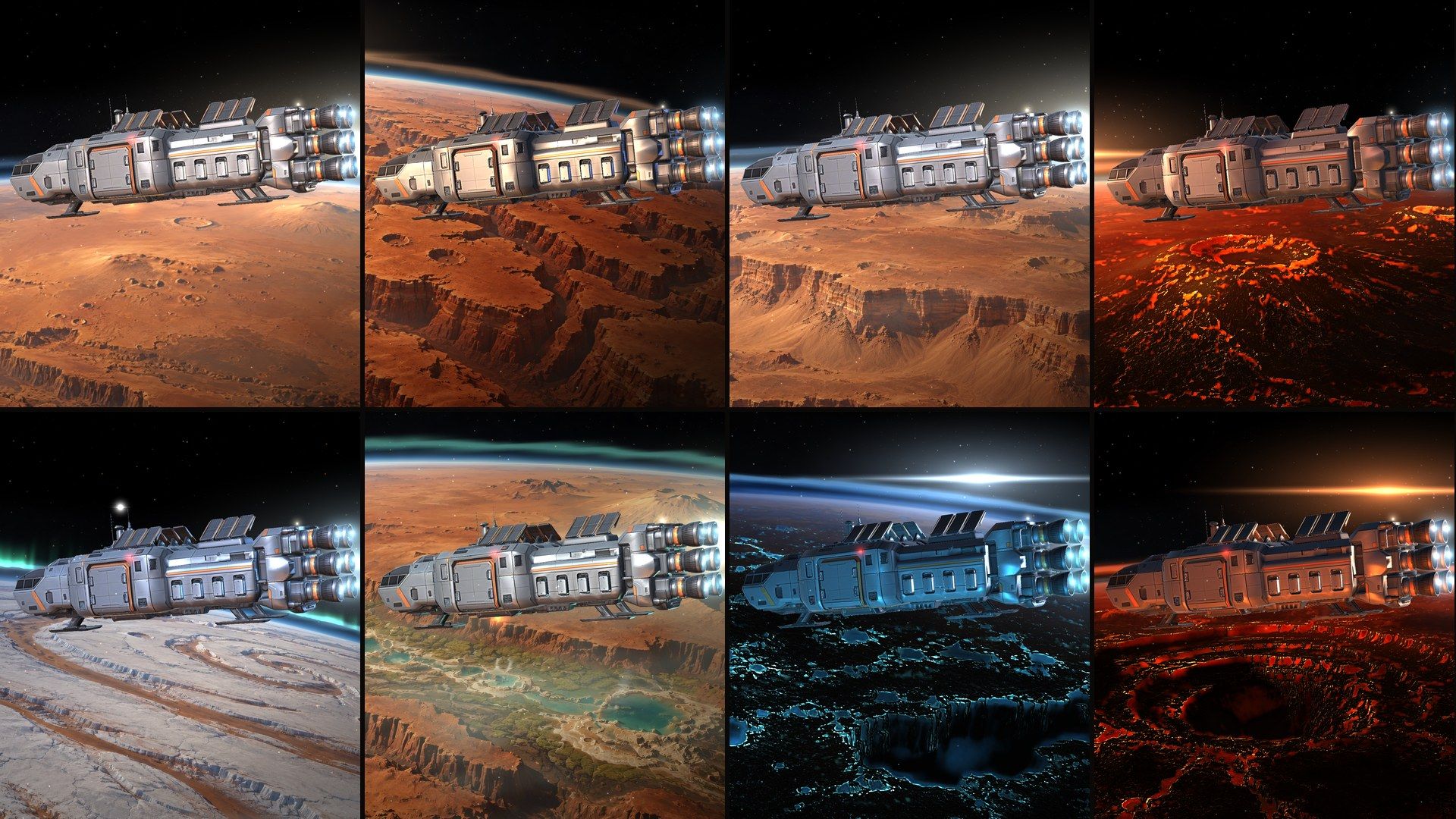
Forty missions. Eight biomes. A descent from the sun-scorched surface into the inferno beneath the planet’s crust.
In Mars 2222 the expedition of the Ares-7 takes the Red Planet step by step. More than the scenery changes here; so do the rules of survival: the terrain dictates how to build a defense, where to run the power grid and where the next blow will come from. And at the end of every region the expedition meets the one who rules those lands.
Every frame below comes from the game’s main menu: the Ares-7 follows the expedition from orbit and holds position right above the region you have reached.
I. Valles Marineris
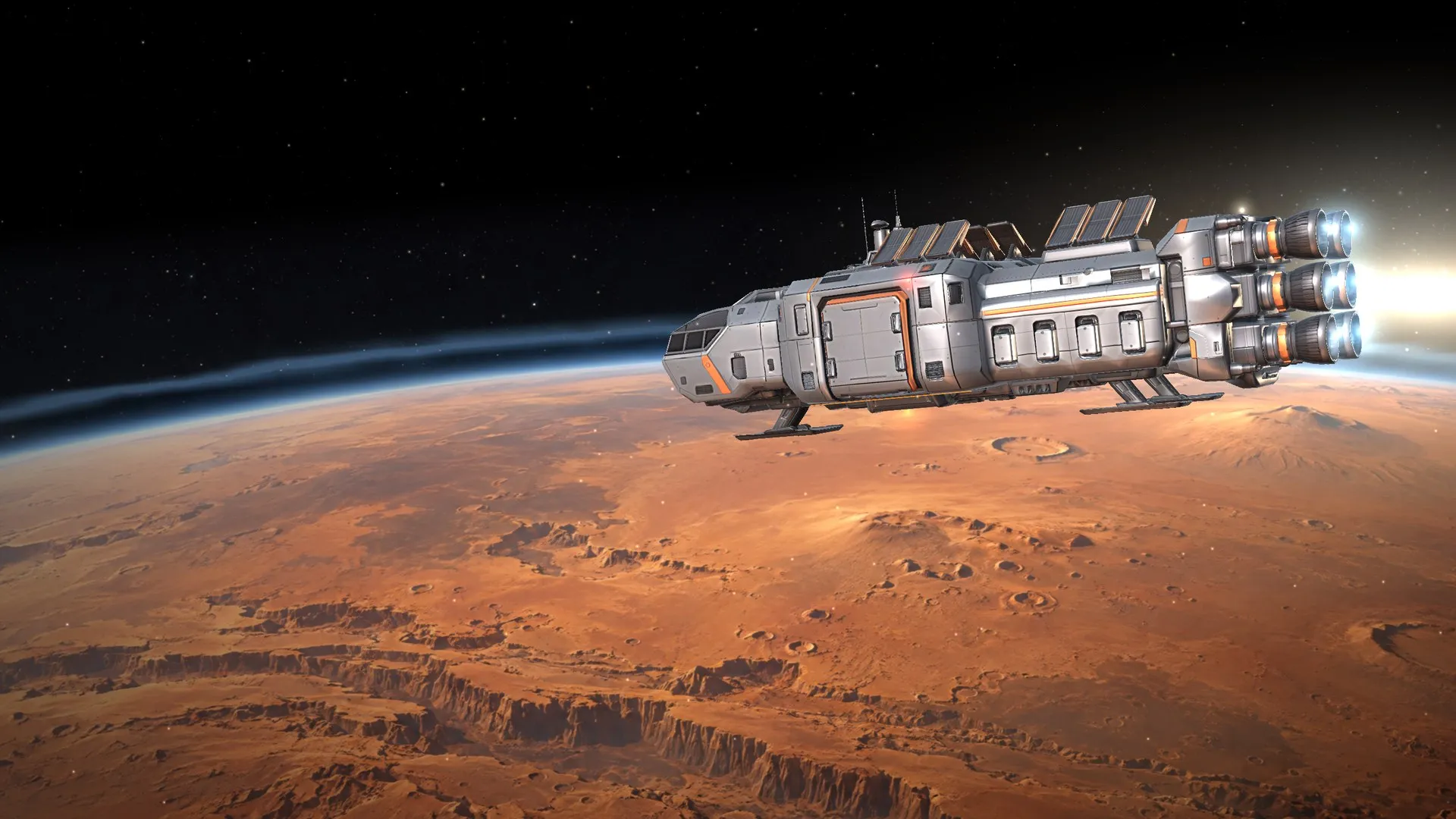
Missions 1–5. Endless dunes, craters and rock pillars. Here the expedition takes its first step onto the surface and learns the main law of Mars: the deeper the drill bites, the sooner whatever lies hidden under the sands wakes up.
What waits. The first resources, a basic defensive arsenal and the need to lay your lines dangerously close to enemy nests. The swarm quickly learns to adapt to our guns, and deep in the valley Sha’rra awakens — a matriarch whose call can raise the whole desert.
II. Canyons
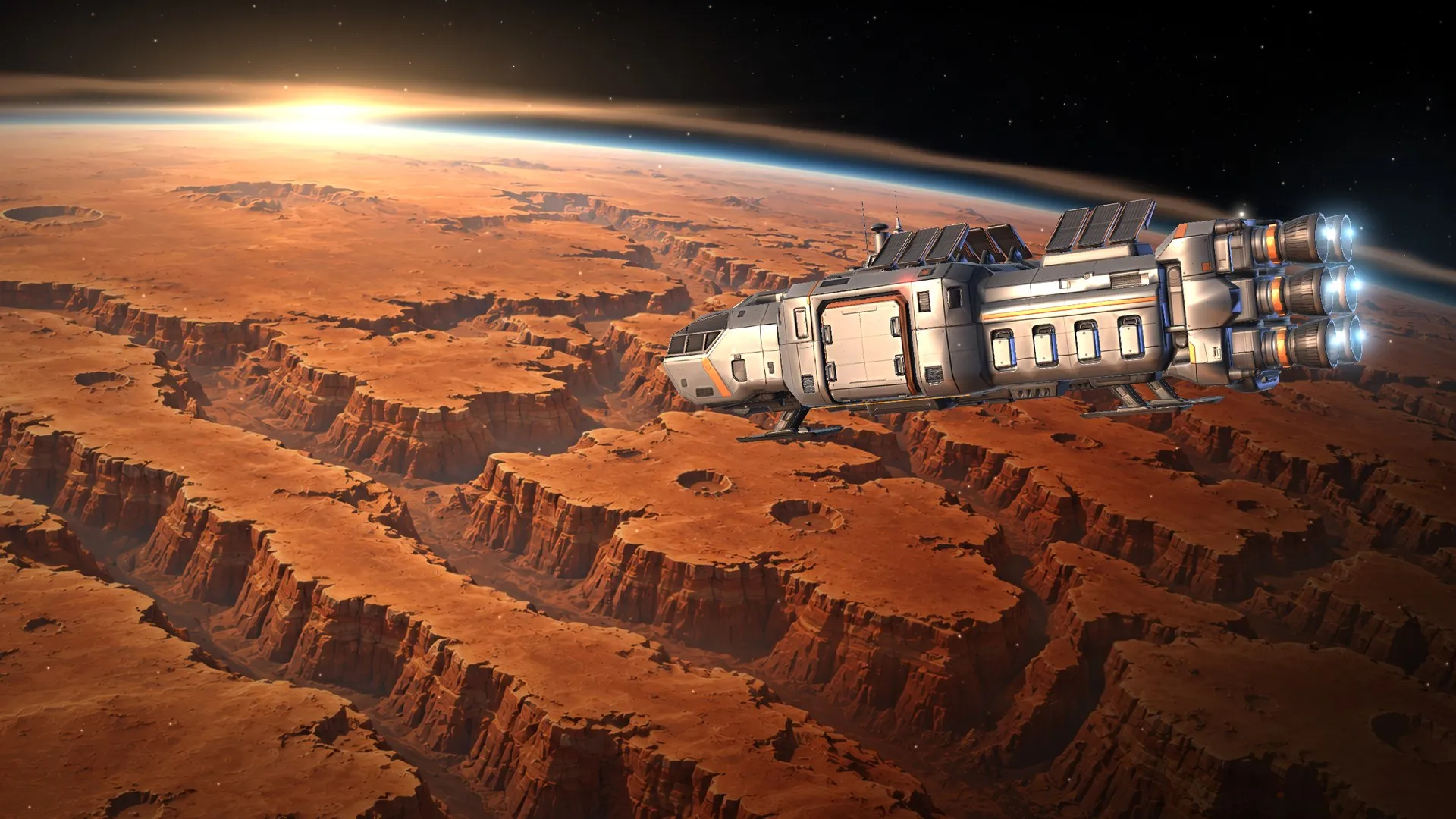
Missions 6–10. Narrow stone corridors and sheer walls that change the geometry of a fight. In these mazes the swarm does not simply advance — it rushes in a torrent, using the terrain as perfect cover.
What waits. A fight for the commanding heights and the first traces of those who were on Mars long before the Ares-7. Drilling goes to a new depth here and disturbs the ancient dwellers of the deep — among them the ruler of the canyons, for whom solid rock is no obstacle.
III. Plateau
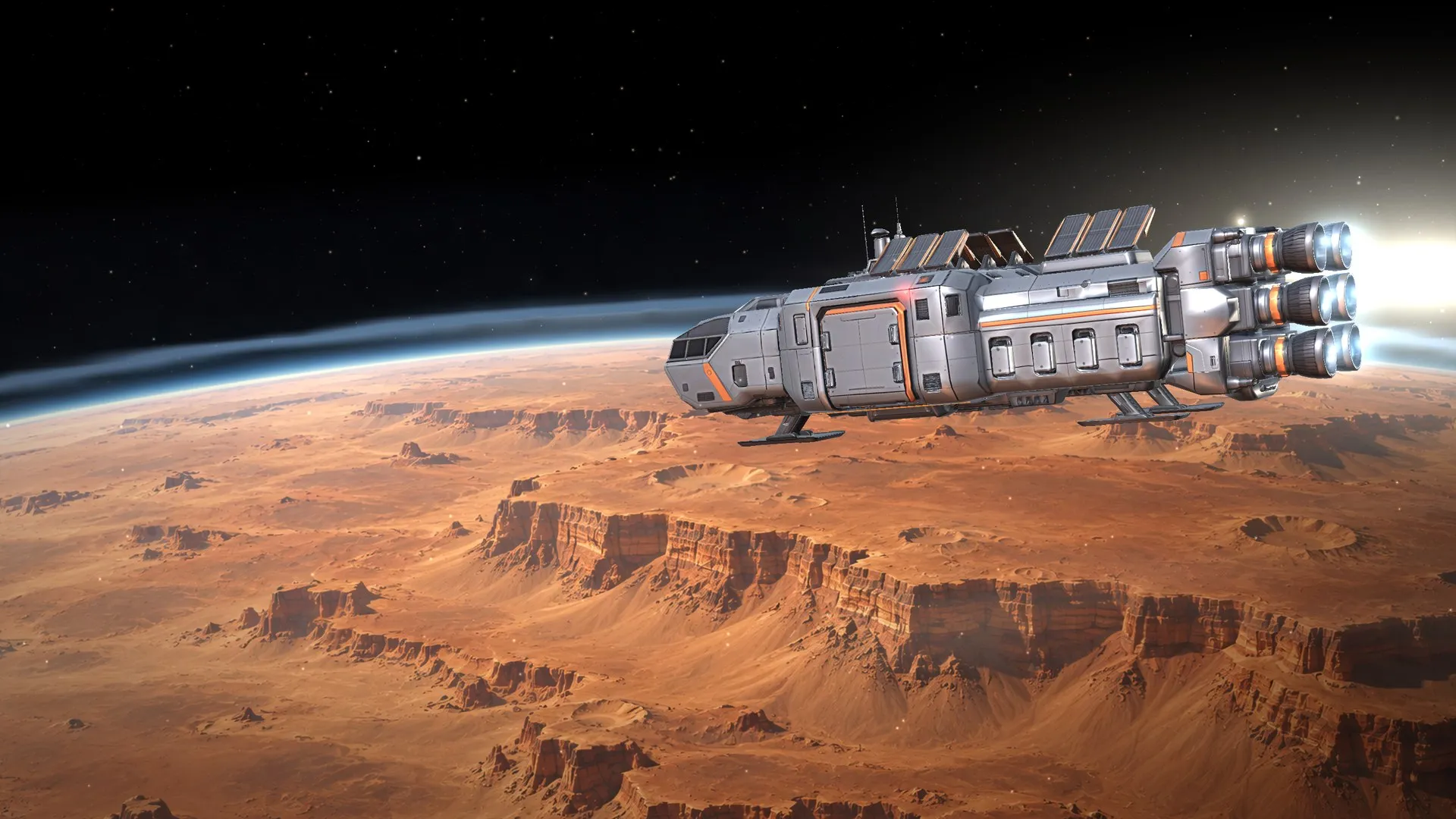
Missions 11–15. Table mountains rising above the valley. From here the view is perfect for kilometres around, but height has its price: the supply line runs across open slopes, and the swarm is well aware of it.
What waits. Abandoned solar fields, catacombs hidden beneath them and new mutations that can upset your usual defensive tactics. For the first time you have to watch not only the ground but the sky — the terrain no longer guarantees safety.
IV. Volcanic Plateaus
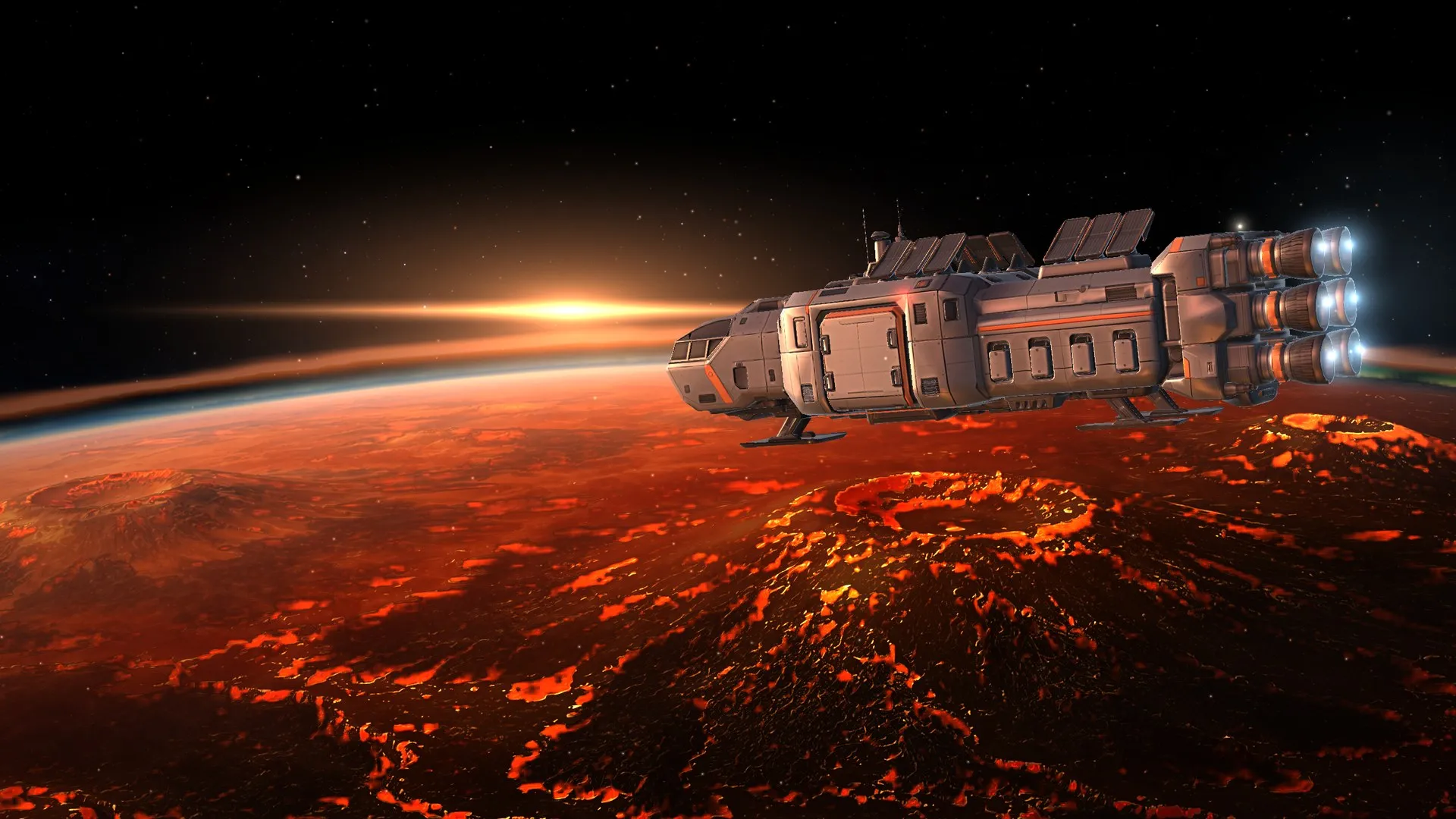
Missions 16–20. Black basalt, choking sulfur fumes and rivers of molten lava that redraw the map in the middle of a fight. Nature here is as much an enemy as the swarm itself.
What waits. Narrow paths between obsidian slabs, unstable crossings and a hostile environment that changes how familiar weapons behave. In the very heart of the caldera hides a matriarch in an impenetrable volcanic shell — to reach her, you will have to find a way to cool this hell down.
V. Permafrost
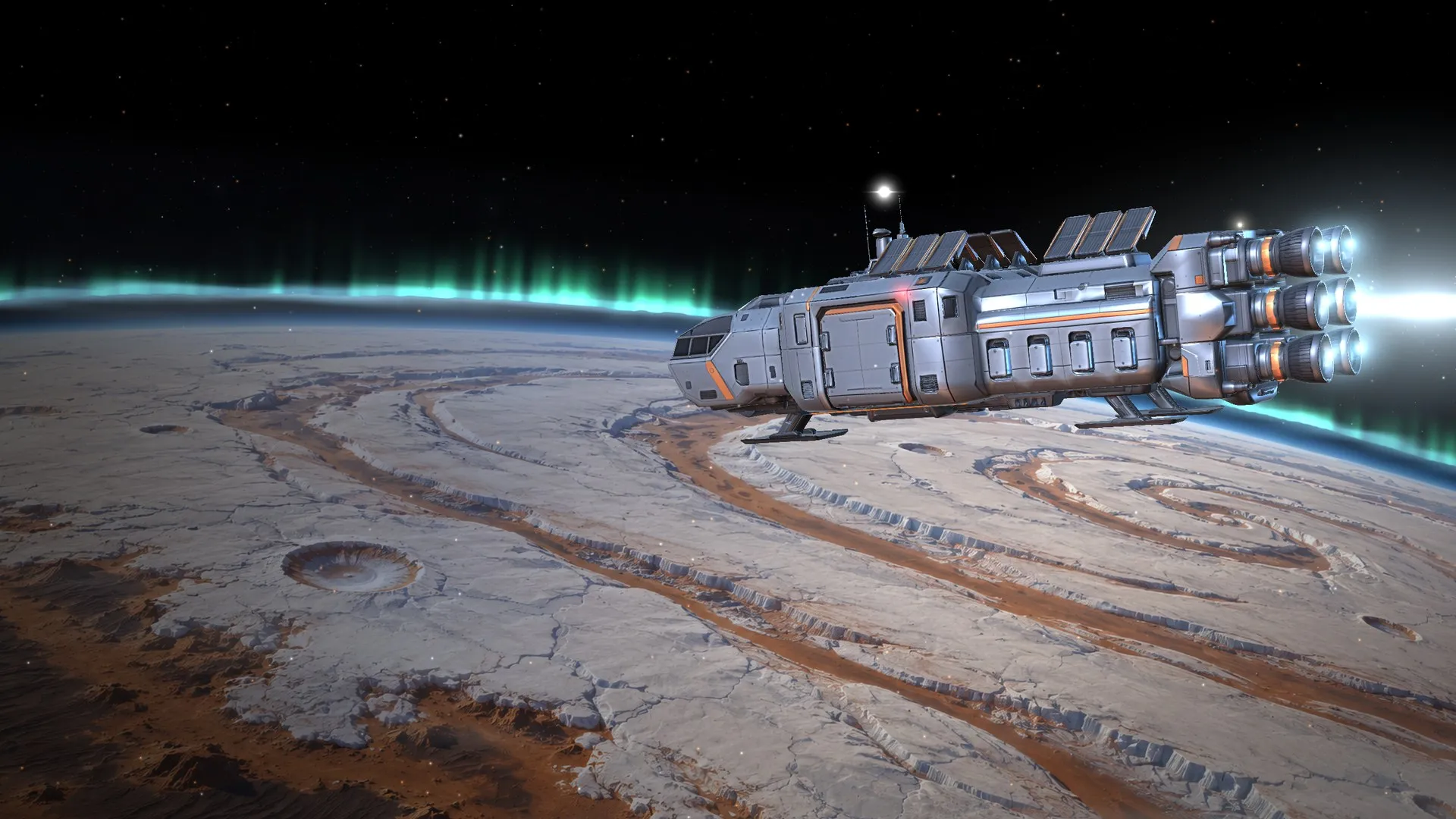
Missions 21–25. The polar cap of Mars: ice ridges, bottomless crevasses and searing cold. On the open ice fields the swarm becomes frighteningly fast, and familiar electronics start to fail.
What waits. Sudden blizzards that turn a defense into a blind firefight, fragile ice bridges and mysterious crystalline rock. The local ruler can bend the elements themselves to her will, turning a snowstorm into cover for attacks from the air.
VI. Oasis
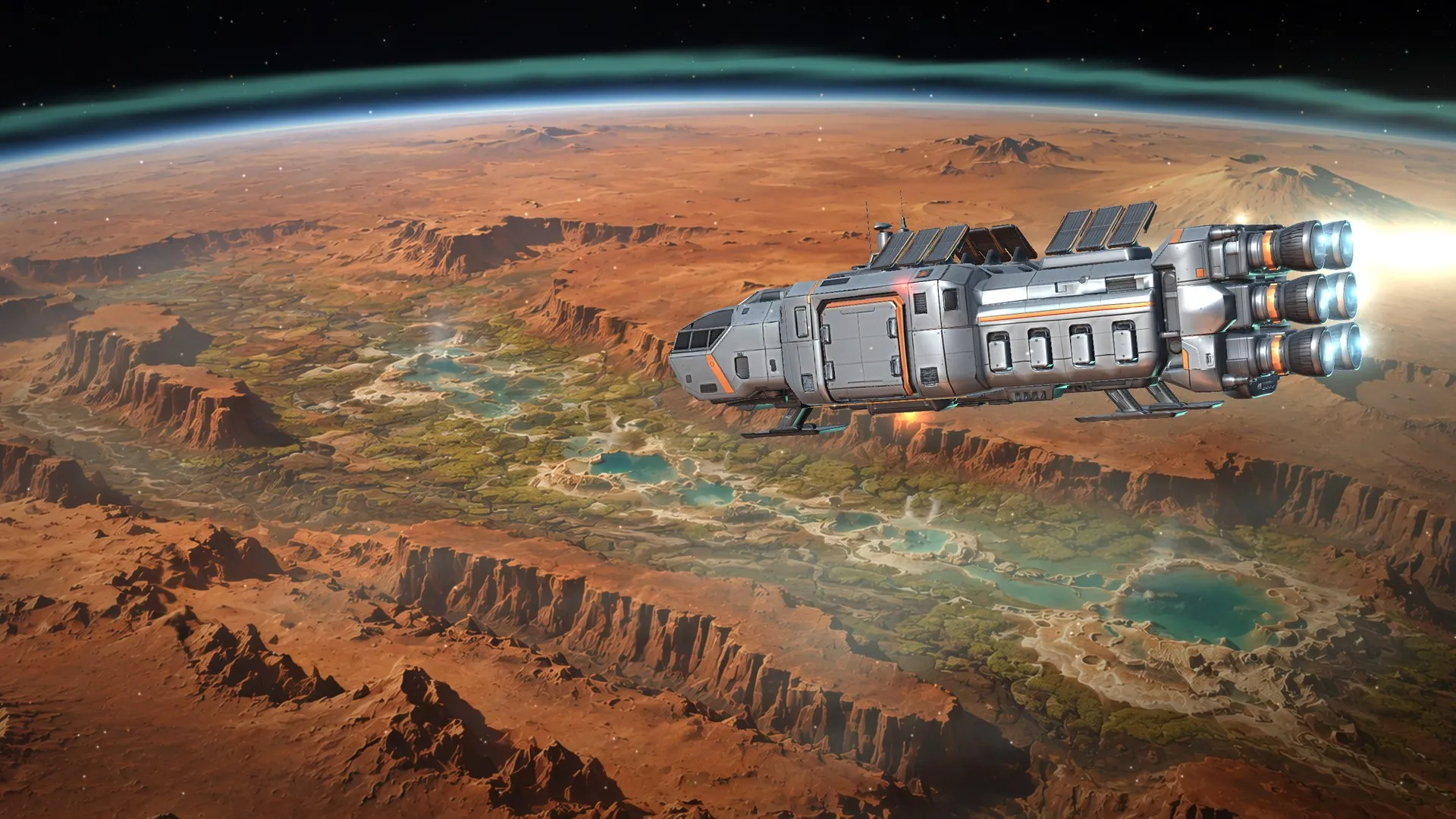
Missions 26–30. A rift with warm springs, turquoise lakes and lush colonies of lichen. The most picturesque place on the planet — and the most treacherous trap.
What waits. Geysers bursting from the ground, the ruins of an old colony with cramped little streets and whole fields of toxic spores ready to flare up from a single spark. Deep in the oasis, by the main spring, a queen lies in wait under a protective dome. But every shelter has a weak spot.
VII. Underground
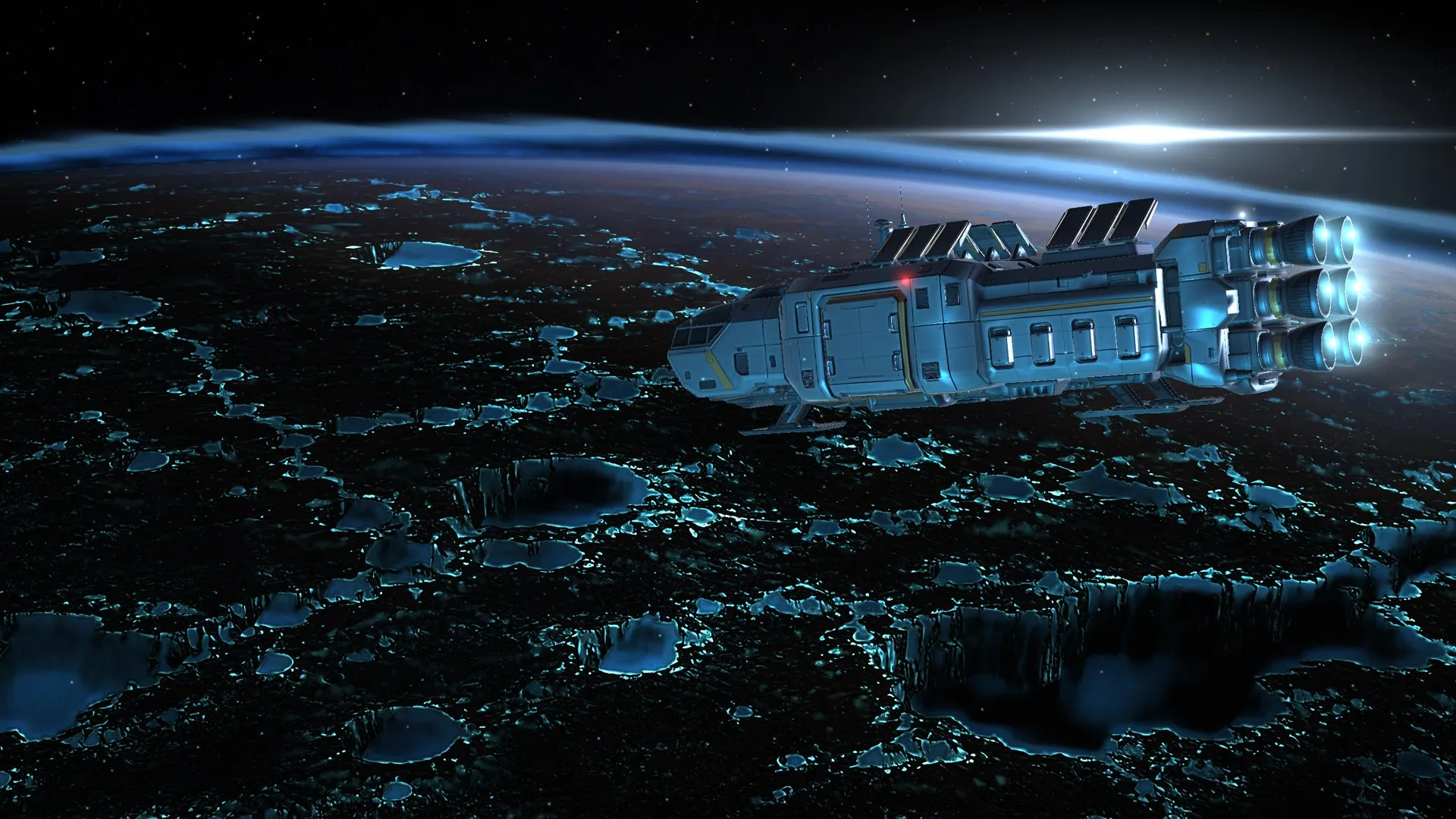
Missions 31–35. The expedition goes beneath the planet’s crust. There is no sun in these giant caves — only rare breaks in the vault give energy and light. This is where the claustrophobia begins.
What waits. Pitch darkness in which the only source of light is the local fungi — and the swarm knows they can be destroyed. The perfect acoustics of the caves amplify every shot and every turn of the drill many times over. Down here it is better to keep quiet: something sleeps in the dark that must not wake.
VIII. Planetary Core
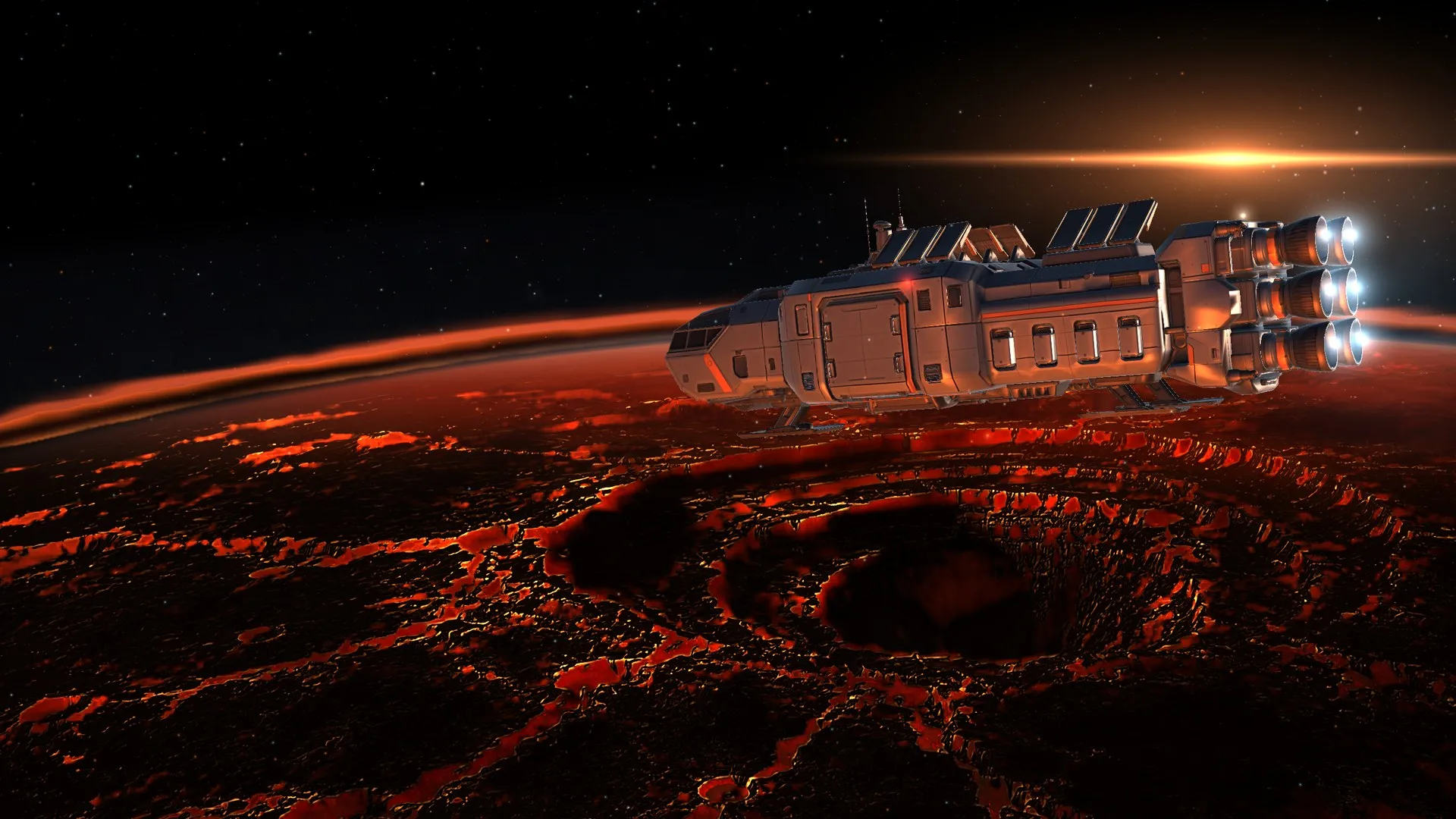
Missions 36–40. The final frontier. A red-hot cavern at the very bottom, where charcoal basalt and black glass are split by scarlet cracks of magma.
What waits. Thick steam that blinds the sensors, rock boiling underfoot and monumental ruins clearly not built by humans. What exactly hides in the fortieth mission will stay a secret until release.
Where we are now
All of Valles Marineris (the first five missions) is already fully playable and available in the demo. The landscapes and unique features of the other thirty-five missions are ready and running in the engine — right now the team is focused on balance, the final models of the swarm and the towers, and sound design.
The release of Mars 2222 is planned for spring 2027. The demo is already open to press and publishers — you can request a key on the game page.